

Mystery Box Battles: Rules, Modes and Prize Pools
Disclosure: Loot Boxes earns commissions from some links on this site and has a commercial relationship with MrLoot, which we promote. Read how we make money and how we review.
A mystery box battle adds a second rule to an ordinary opening: who receives the items after they are revealed. Understanding the drop chances is only half the job. You also need to understand how the battle distributes the prize pool.
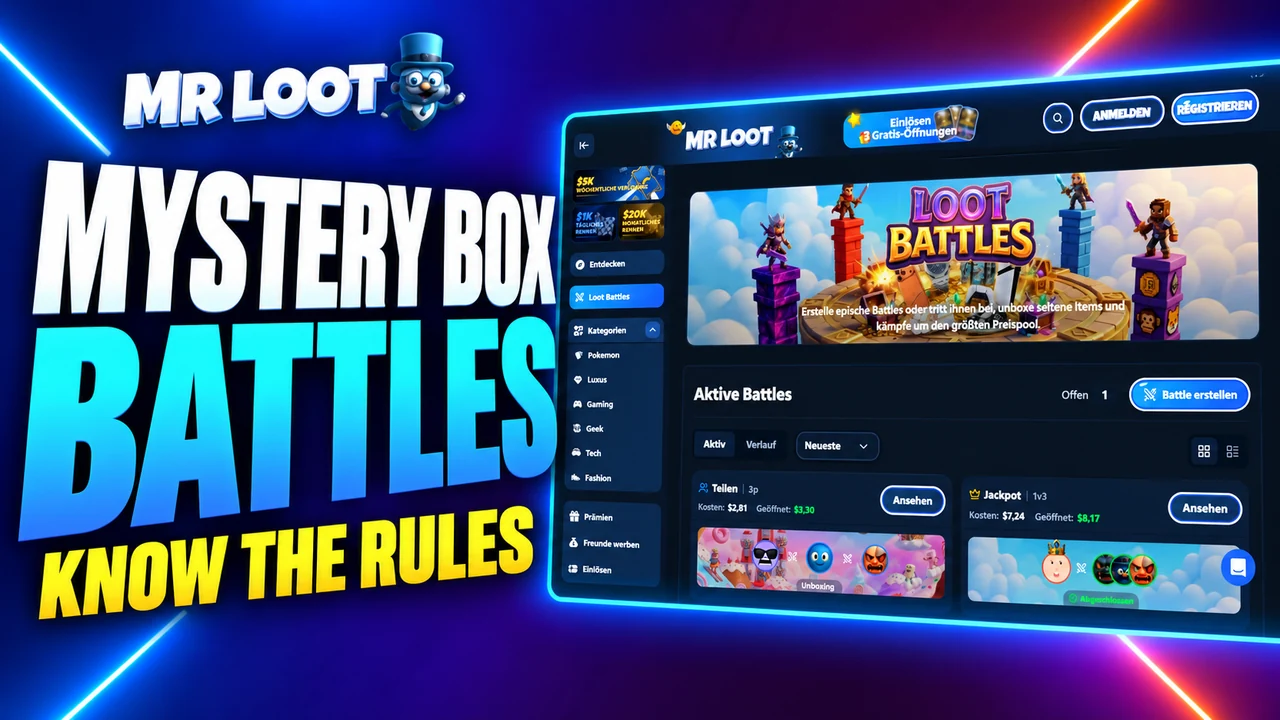
What is a mystery box battle?
In a typical battle, several participants open a specified sequence of boxes and the results are compared under the selected mode. Entry cost, participant count and prize allocation should be shown before entry. The rules of the individual battle matter more than a familiar looking mode name.
For a solo opening, the item revealed normally becomes your result under the site's terms. In a pooled battle, the item you reveal may help determine the outcome without becoming yours to keep. Read the allocation rules before confusing the reveal animation with ownership.
A two player example
This is a fictional example with invented item values. Two people each pay $10 to enter one round. Player A reveals an item valued at $3 and Player B reveals one valued at $8. The total displayed pool is $11.
| Hypothetical rule | Player A | Player B |
|---|---|---|
| Each keeps their own result | $3 item | $8 item |
| Highest result receives the pool | No items | $11 in displayed item value |
| Shared pool | Share specified by the rules | Share specified by the rules |
The table explains allocation, not returns you should expect. A pooled mode does not create extra value by combining the items. It changes who receives the value that was revealed. Fees, item valuation and redemption conditions can further change what those outcomes are worth to participants.
Common mode ideas to read carefully
A highest total mode may compare the sum of results across rounds. A lowest total mode may reverse that ordering. Team modes may compare combined results, while a shared mode may divide a pool. Names such as crazy, jackpot or group are not standard contracts: look for the operator's exact definition.
Check ties, partial rounds, cancelled games, and whether every participant must be present. A mode description should explain what happens in edge cases as well as the exciting example in the banner.
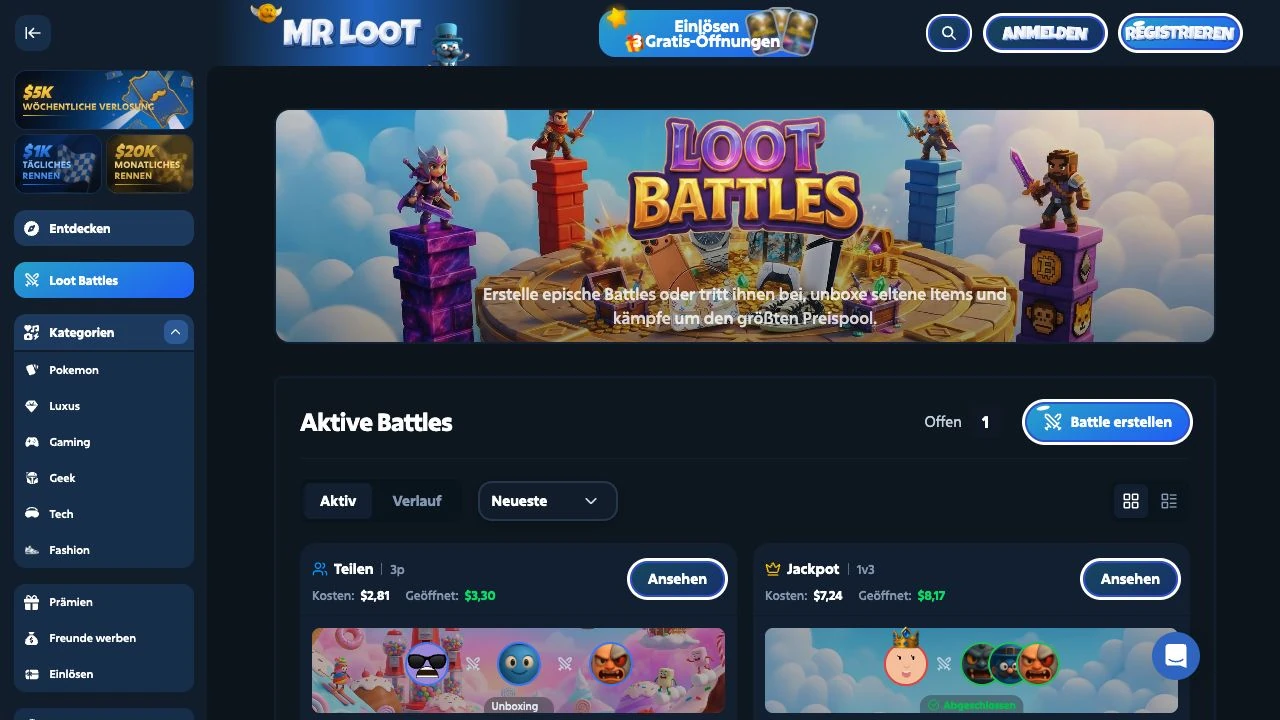
How MrLoot describes its battles
MrLoot's battle terms describe participants opening the same box sequence with allocation governed by the selected mode. They also distinguish products from XP, which cannot be exchanged for cash. Our view: the familiar catalogue makes the format easy to recognise, but read the mode before joining.
The MrLoot review covers the broader account and redemption rules. A battle outcome and the ability to redeem that outcome are separate questions, just as they are for ordinary openings.
Fair openings and fair allocation are separate checks
A verification method can help check how individual results were generated. You still need a clear allocation rule linking those results to the final prize distribution. Keep the battle identifier, box sequence, mode and result record together if you want to inspect what happened.
EmpireDrop's verification page documents battle verification separately from ordinary box openings. Do not assume that a verifier designed for a solo opening accepts a battle's inputs. Our provably fair guide explains the general principle and its limits.
Why more opponents do not create a better deal
A larger room may produce a larger displayed pool because more entries contribute results. That alone says nothing about your chance of receiving it or its average value per participant. A dramatic pool total is not a discount.
The same caution applies to adding rounds. If each round costs $4 and a battle contains five rounds, an entry may cost $20 before any other conditions. Read the final displayed price instead of anchoring on the cheapest individual box in the sequence.
Neither joining late nor choosing a visually exciting seat should be treated as a strategy for predicting random outcomes. Do not increase your next entry because the last battle went badly.
A short checklist before entry
- Know the full entry price and how many rounds it covers.
- Read who receives the pool and whether you can receive no items.
- Separate XP, site credit and redeemable products.
- Check how ties, cancellations and unavailable participants are handled.
- Confirm the verification method covers this exact format.
- Keep the entry inside the entertainment limit you chose beforehand.
If you only want a particular physical item, a battle is a complicated way to pursue it. Compare direct purchase with the uncertainty, costs and redemption rules before treating the format as shopping for that item.
Frequently asked questions
Do I keep the item I reveal in a battle?
Not necessarily. The selected mode determines who receives the pool. Your reveal and your final allocation can differ.
Are battles better value than solo openings?
A larger prize pool does not establish better expected value per entry. You need the full entry cost, outcome probabilities, allocation rules and redeemable values.
Does provably fair guarantee that I will receive a prize?
No. Verification concerns the generation of results. The mode can allocate no items to some participants, and redemption has separate conditions.