

Mystery Box Budget: Set a Limit Before You Open
Disclosure: Loot Boxes earns commissions from some links on this site and has a commercial relationship with MrLoot, which we promote. Read how we make money and how we review.
A cheap mystery box can become an expensive session through repetition. The price of one opening is easy to see; the total across deposits, exchanges, battles and shipping is less obvious. A simple written limit makes the full cost harder to overlook.
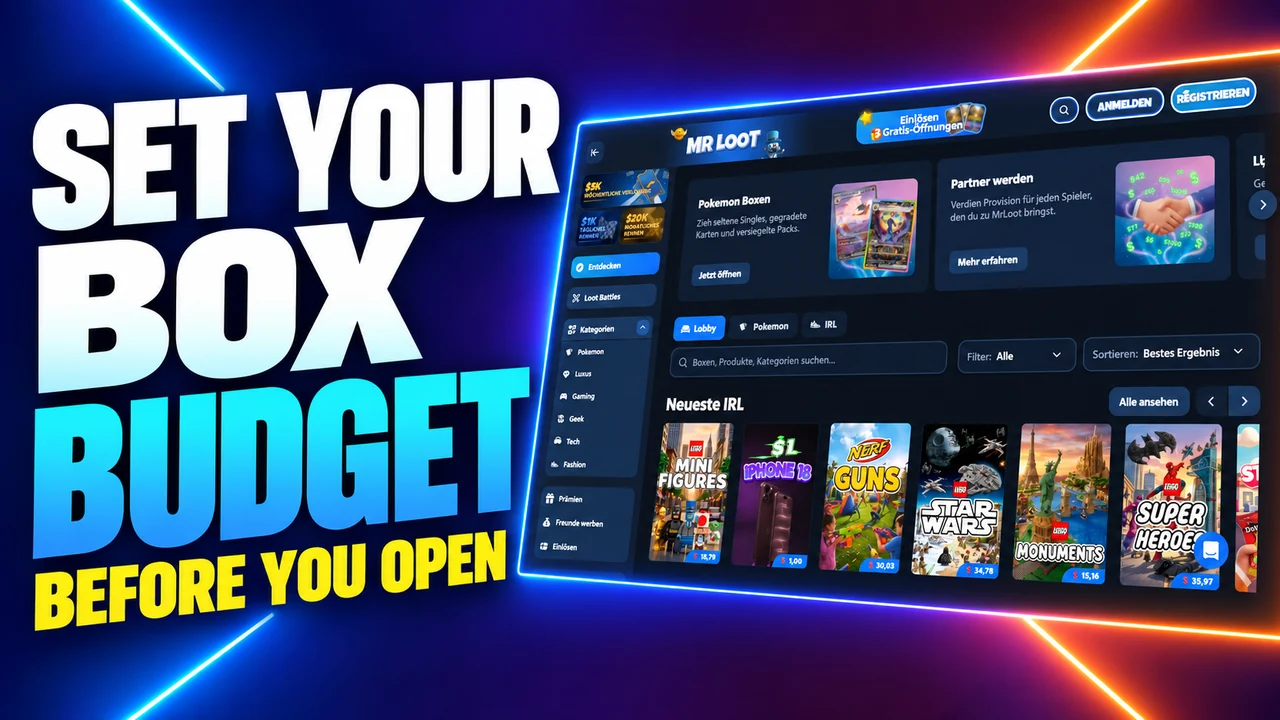
Choose the amount before browsing the prizes
Start with money you are comfortable spending entirely on entertainment. If losing access to that amount would affect bills, savings commitments or essentials, it is not a suitable opening budget. A prize you might receive should never be needed to make the spending affordable.
Pick an amount and a time period together. A $20 session limit and a $20 monthly limit are very different promises to yourself. If you use several platforms, apply the limit to the combined spending rather than quietly creating a new allowance on each site.
Separate spending from turnover
Imagine buying $20 in credits, opening boxes worth $12, exchanging an item for 4 credits, and opening another 6 credits of boxes. Your purchase spending remains $20. Your total opening activity is 18 credits. Neither figure tells you that you earned cash.
Tracking both helps: purchase spending records money leaving your payment account, while activity records how quickly you cycle through openings. Keep delivered items and actual settlements in their own column. Returned site credit belongs in a credit column.
| Event | New money spent | Site activity |
|---|---|---|
| Buy credits | $20 | 20 credits available |
| First openings | $0 | 12 credits spent |
| Exchange an item | $0 | 4 credits returned |
| Further openings | $0 | 6 credits spent |
| Another purchase would exceed the chosen limit | Do not add it | End the session |
A lower price does not guarantee better odds
Ten $1 openings and one $10 opening cost the same before fees. Their outcome distributions can be very different, but the prices alone do not identify which is better value. Compare published odds and meaningful outcome values, not the size of the headline prize.
Our odds calculator can explain the arithmetic. It cannot promise an affordable outcome, and it should not become a reason to extend a session you already planned to stop.
Use platform tools to reinforce your own rule
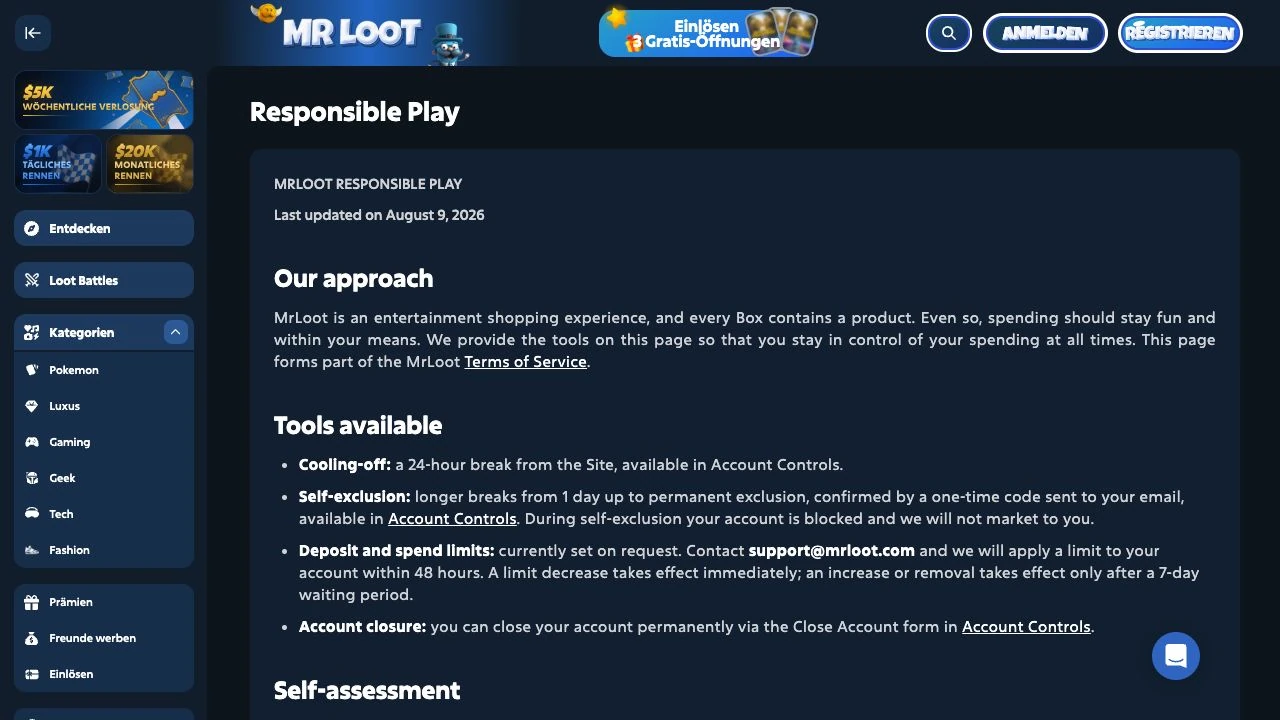
MrLoot's Responsible Play page describes deposit limits, cooling off and self exclusion. Those are useful features to look for when comparing sites, including our partner MrLoot. Their availability does not remove the need to set a realistic personal limit.
Read when a limit change takes effect and whether a restriction covers all paid features. A tool that limits purchases may not measure every use of existing credit. If you need a complete pause, use the option designed for that purpose rather than relying on a vague intention to spend less.
Include the costs after the opening
A physical item may need delivery or import charges. A settlement may have a quoted fee. If your entire entertainment allowance is spent on openings, those later costs can put pressure on you to add more money.
For a hypothetical $25 total cap, you might decide not to buy any openings that would leave you unable to pay the known delivery cost of a prize you want. This is a cost allocation exercise, not a suggested budget. If the final costs cannot be estimated well enough, leave room for that uncertainty or skip the purchase.
Make the stopping point independent of the result
Stop because you reached the preselected spending or time limit, not because the next opening feels due. A previous run of low value results does not make a better result inevitable. Likewise, receiving a valuable item does not require another session to make use of the moment.
A short break before exchanging a prize can be helpful. Write down what the available options are worth to you now, including keeping the item or using an eligible redemption. Returning it to credit is another decision to spend, even if it requires fewer clicks than a new purchase.
When the plan keeps slipping
If you repeatedly raise limits, borrow to continue or hide the spending, stop paid activity and use a longer restriction. The support page lists places to find help. You do not need to wait for a specific loss amount to ask for support.
Mystery boxes make most sense as a capped entertainment expense for adults who understand the uncertainty. If your real goal is to own a certain product, comparing normal retail prices gives you a much more predictable purchase.
Frequently asked questions
Are many cheap openings safer for my budget?
A lower individual price can still add up quickly. Set a total spending limit and count all purchases across sites.
Should I count exchanged credits as profit?
No. Keep site credit separate from actual money received. Spending those credits again creates more uncertain outcomes.
Can a strategy recover previous spending?
There is no reliable recovery strategy for random openings. Do not raise a budget because earlier results disappointed you.