

Loot Boxes vs Mystery Boxes: Differences and Gambling Rules
Disclosure: Loot Boxes earns commissions from some links on this site and has a commercial relationship with MrLoot, which we promote. Read how we make money and how we review.
People throw the words around like they are the same thing, but loot boxes and mystery boxes are cousins, not twins. Both are a paid random draw wrapped in a satisfying reveal. The difference is what falls out the other end. One hands you a pixel sword for a game you already play, the other can ship a real watch to your door or pay you back in crypto. If you have ever wondered what separates a box mystery on a betting site from the loot boxes in your favourite shooter, here is the clean version.
Key takeaways
- Loot boxes usually live inside a video game and pay out virtual items with no official cash value.
- Mystery boxes are standalone sites where you buy a box for real money and win a real prize you can keep, ship or sell back.
- The draw mechanic is identical. The payout, the regulation and the ability to cash out are where they split.
- Provably fair is far more common on mystery box sites than inside game loot boxes, which makes the good ones easier to trust.
What is a loot box?
A loot box is the classic in game version. You earn or buy a sealed crate inside a video game, you open it, and out pops a virtual item: a skin, a weapon, a character, a pack of cards. The reward only matters inside that game, and in most titles it carries no official cash value. Loot boxes are the reason this whole category exists in the public imagination, and they are also the reason regulators started paying attention, because millions of players, some very young, were spending real money on random digital rewards.
What is a mystery box?
A mystery box flips the model inside out. Instead of living in a game, it is a standalone product on a website. You pay real money, a weighted random draw picks a prize from a published list, and the prize is real: an electronic gadget, a designer item, crypto, a gift card, or balance you can withdraw. You usually get to keep the item, ship it to your door, or sell it back for value. The reveal feels just like opening loot boxes, but the thing you win has a price tag in the actual world. If you want the mechanics in full, our explainer on how mystery boxes work walks through the odds and the maths.
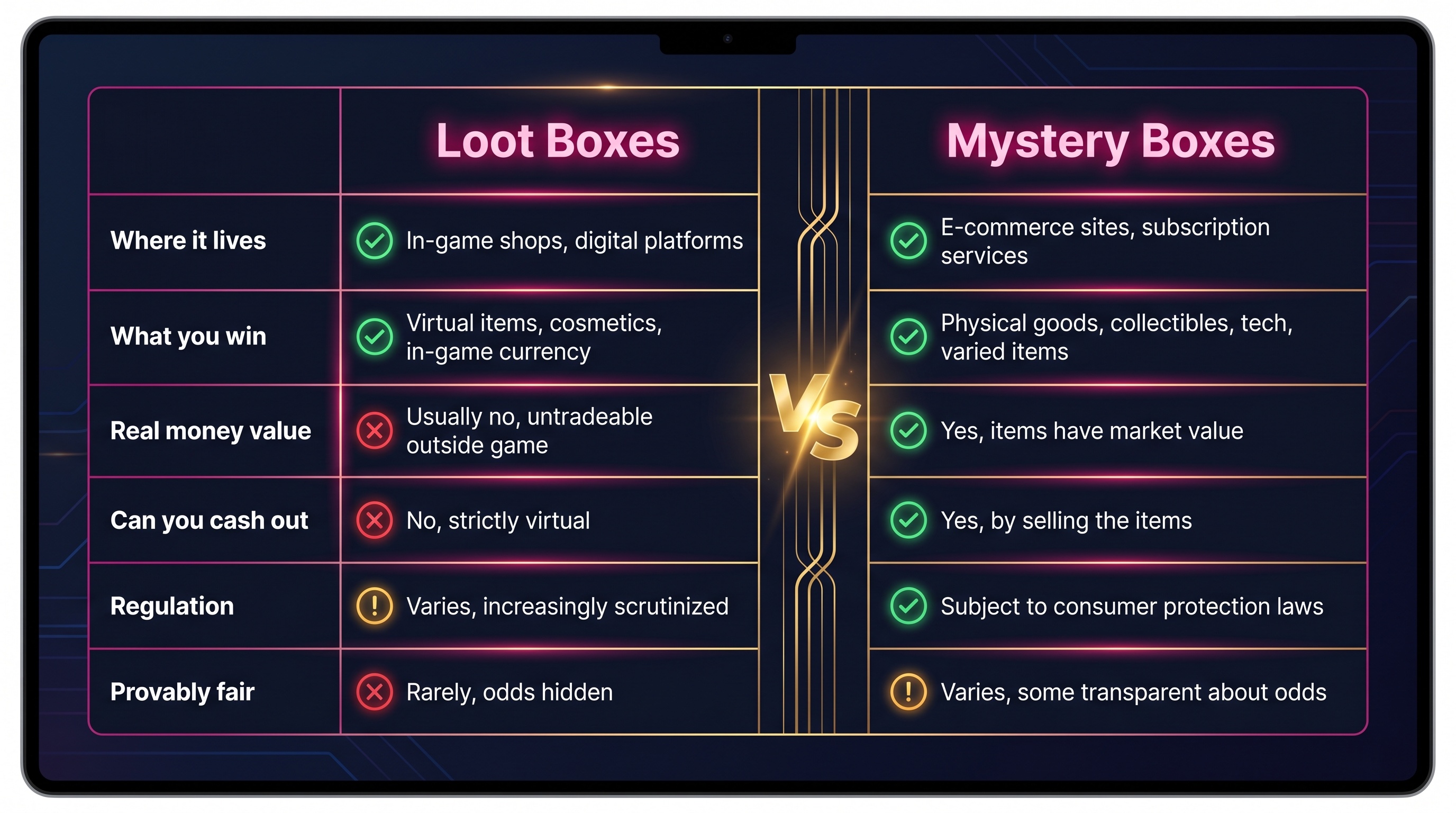
The differences that matter
Real money value
This is the big one. A loot box reward usually only has value inside its game, and trading it for cash often breaks the rules. A mystery box prize has real value by design. You can keep it, ship it or sell it back, and on the better sites you can withdraw the balance to crypto or a card. That single difference changes everything about how you should think about the two.
Regulation
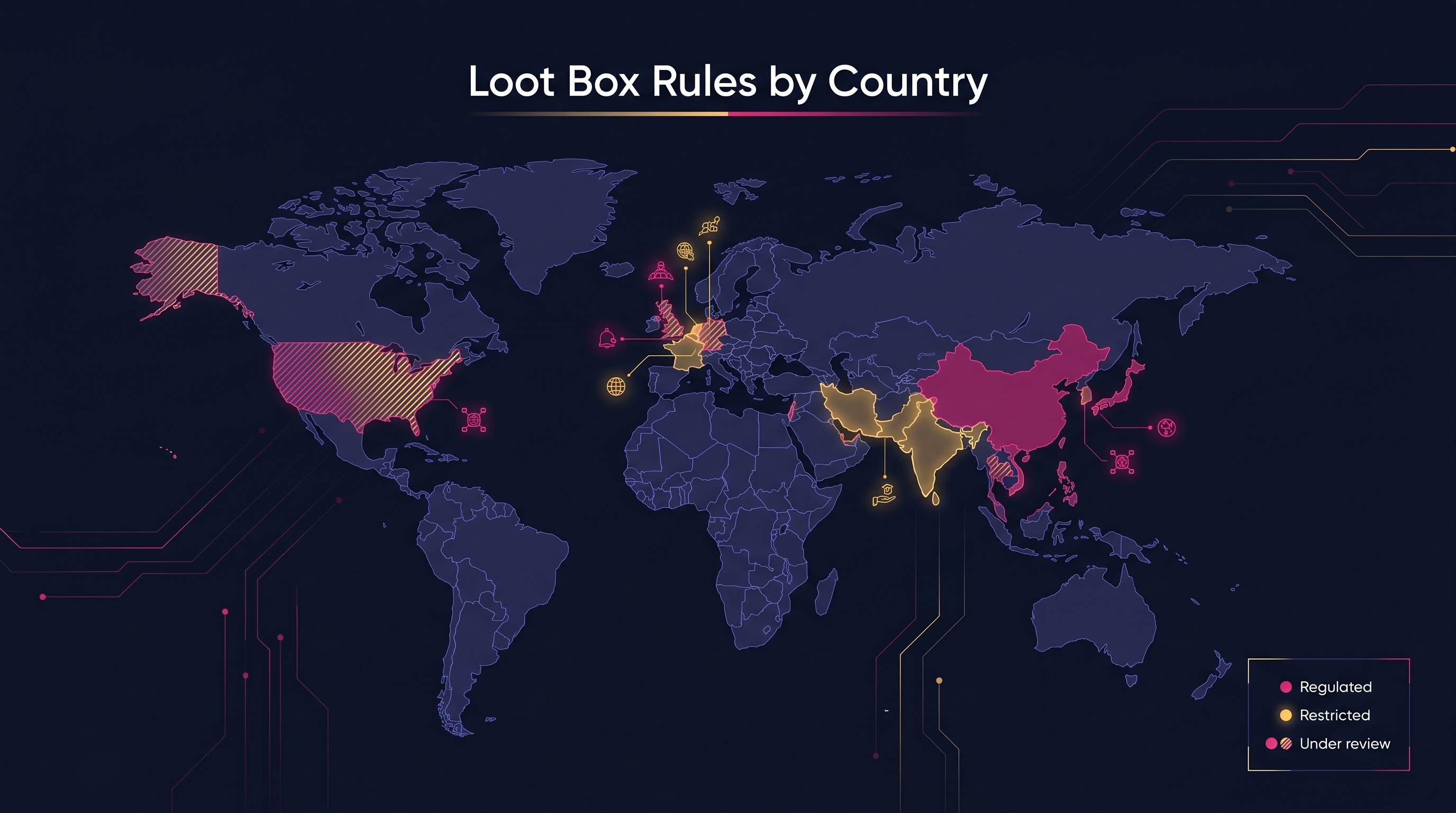
Because game loot boxes targeted huge audiences including minors, several countries moved to regulate or ban them, and the debate about whether they count as gambling is still rumbling on. Mystery box sites generally present themselves as adult entertainment from the start, with age checks and responsible play tools. Rules vary by country and some sites restrict certain regions, so it always pays to check what is allowed where you live.
Provably fair
Here is where mystery boxes often pull ahead on trust. Many of the good box sites support provably fair, a system that lets you verify a draw was decided before you clicked, using a hashed server seed, your client seed and a nonce. Game loot boxes almost never offer that. So while both are random draws, a fair box mystery can actually prove its randomness in a way most in game crates simply cannot.
Same dopamine, different stakes. A loot box costs you a skin you will forget about. A mystery box costs you real money, so it deserves real scrutiny before you open one.
Where they overlap
Under the hood, the engine is identical: a weighted random draw against a set of odds, with a house edge baked in. Both lean on the same psychology of the reveal, the near miss and the rare big win. And both reward the same discipline. Set a budget, expect to pay the house edge over time, and treat the fun as the product rather than an investment. Whether it says loot boxes or mystery boxes on the tin, the smart player behaves the same way.
So which should you buy?
If you live inside one game and just want cosmetics for it, a loot box is the natural fit, just know the reward rarely leaves that game. If you want the thrill of the open with a chance at something you can actually use, sell or withdraw, a mystery box is the better pick, as long as you choose a site that publishes odds and supports provably fair. That is exactly the filter we use in our best mystery box websites rankings.
Want a box mystery that pays in the real world?
MrLoot illustrates how a merchandise themed platform can also use game elements such as XP and battles. We like its catalogue design. Its terms separate internal credit and XP from won products, so those categories should not all be described as cash prizes. Read the MrLoot review and battle guide for the details. MrLoot is our commercial partner.
Read the MrLoot reviewThe short answer
Loot boxes are the in game version with virtual rewards and heavy regulatory scrutiny. Mystery boxes are the standalone, real money version where you can actually cash out, and where provably fair makes the good sites easy to trust. Same satisfying click, very different stakes. Ready to try one for real? Our guide to opening a mystery box online shows you how to do it without getting burned.
Frequently asked questions
What is the difference between loot boxes and mystery boxes?
Loot boxes usually live inside a video game and pay out virtual items for that game, with no official cash value. Mystery boxes are standalone online boxes you buy for real money, and you keep, ship or sell back a real prize. The mechanic is the same weighted random draw, the payout is the big difference.
Are mystery boxes the same as gambling?
Mystery boxes share the core feature of gambling, a paid random draw with an uncertain outcome and a house edge. The honest sites treat them that way, publish odds, support provably fair and encourage budgets, which is what separates a fair box mystery from a trap.
Can you make money from mystery boxes?
Occasionally a lucky open beats the price, but over time the expected value sits below the price because of the house edge, usually returning 30 to 70 percent. Treat mystery boxes as entertainment, not income, and you will play sensibly.
Do loot boxes have provably fair?
Almost never. In game loot boxes rarely let you verify the draw. Many mystery box sites do support provably fair, which is one reason the good box sites are easier to trust than a typical game crate.